Phoenix to Tonto: separate the road approach from the dwelling visit
A short-looking walk and a scenic-looking road can each hide a demanding part of a day trip. For a Phoenix-area journey to Tonto National Monument, make two separate decisions: which current road approach suits the vehicle, and which offered visit suits the people. Neither decision should be made from a single attractive photograph.
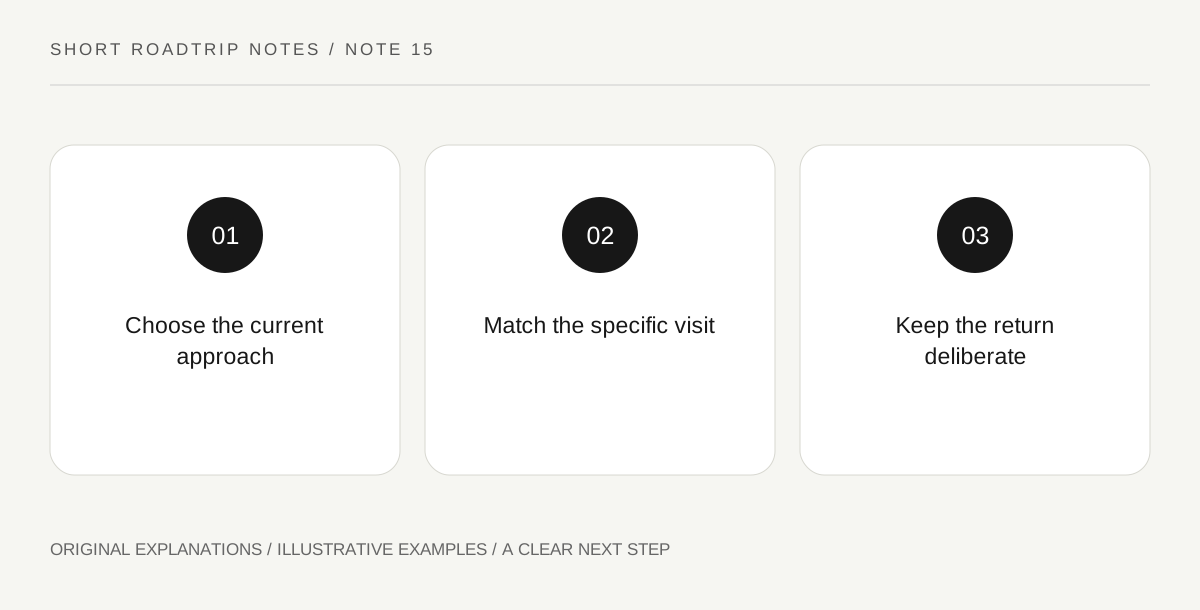
Original explanatory diagram. Read the full method and limitations below.
Choose an actual highway approach
The monument’s directions describe approaches using Highway 188 and connect them with different parts of the Phoenix area. Compare the current permitted approach from your own starting point rather than assuming every scenic route is open or appropriate. The directions page is dated, so any older closure or route description is a reason to consult current transportation information, not evidence of today’s status. Keep the exact monument arrival separate from a general Roosevelt-area destination in the navigation list.
Do not translate distance into difficulty
The park’s visit-planning information distinguishes the visitor-center experience from steep access to cliff dwellings. A short stated distance does not tell a visitor what ascent, surface, temperature or individual effort will feel like. Discuss the actual requirements before making the dwelling visit the only acceptable outcome. People who prefer or need another form of access should be able to choose a suitable offered experience without being treated as though they have failed the trip.
Treat different dwelling experiences separately
The operator describes different arrangements for the lower and upper dwelling visits. Do not assume that arriving at the monument gives access to every place shown in a photograph. Verify the specific current experience, any reservation and its requirements directly with the operator. Build the day around the arrangement you actually have, not a blend of details from separate activities. This also prevents a group from planning its road arrival around the duration of the wrong visit.
Keep the return within the original purpose
An additional scenic circuit should be a new choice, not an automatic sequel to the monument visit. Compare its present road status, vehicle suitability and complete route home before accepting it. If the main experience has already provided an absorbing day, return by the appropriate planned approach. The itinerary should protect attention for the driving as well as the interpretation. A shorter return can be a deliberate conclusion, especially when the group’s outdoor activity has changed.
An illustrative route decision
An illustrative Phoenix-area pair chooses a current Highway 188 approach suitable for their vehicle and investigates one specifically offered dwelling experience. They also identify the visitor-center alternative so that the trip does not depend on an unsuitable ascent. They leave an old scenic-road suggestion unconfirmed rather than treating its appearance on a dated page as permission to drive it. No road opening, booking availability or individual physical suitability is promised here.
Questions that come up
Can an old scenic-road description establish that the road is open?
No. Road controls and conditions change. Use current transportation and operator information before selecting the approach, especially when a dated page discusses closures or vehicle limitations.
Does reaching the visitor center guarantee access to the upper dwelling?
No. Different experiences have different arrangements. Confirm the exact visit and its requirements rather than assuming that general arrival includes every guided or restricted component.
References and scope
These sources support the factual background. Examples and exercises are original illustrative teaching material. References do not imply endorsement.
- National Park Service — Tonto: directions — Highway 188 approaches; dated page is not evidence of current scenic-road status.
- National Park Service — Tonto visit planning — Different access and physical requirements for the visitor center and cliff-dwelling visits.