Chicago to Indiana Dunes: give the day two exact addresses
A park name is not a complete driving destination. For a short Chicago-area escape to Indiana Dunes, build the day around an orientation stop and one chosen outdoor access point. This small distinction keeps an attractive collection of shoreline, trails and facilities from becoming a string of accidental detours.
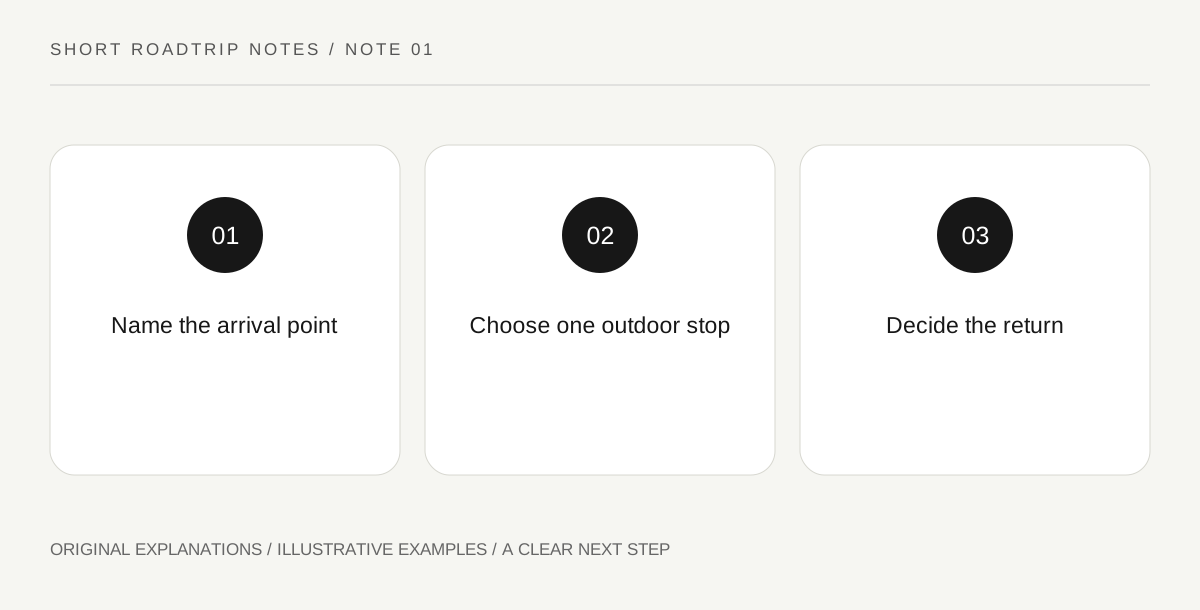
Original explanatory diagram. Read the full method and limitations below.
Separate arrival from the main visit
The National Park Service places the Indiana Dunes Visitor Center on State Road 49 and directs travelers to separate facility maps. Use the visitor center as an orientation address, then enter a second, specific destination for the activity you actually intend to do. A broad park search can hide the distance between useful places. Write both addresses in the shared itinerary so that a passenger, a second driver and the person arranging lunch are picturing the same arrival sequence.
Choose a reason for the second stop
Give the outdoor portion one clear purpose: a permitted shoreline stroll, a particular signed trail, or a picnic at an identified facility. Do not promise all three before studying their locations and access requirements. A single good stop gives the group time to settle, use facilities and notice the landscape. If the first choice cannot be used, replace its purpose with a nearby suitable alternative rather than collecting extra driving to rescue an ambitious checklist.
Make the car serve the day
Arrange items by the order in which they will leave the vehicle. Put the walking bag, weather layers and any picnic supplies within reach without unpacking overnight luggage onto a parking surface. Keep the return address separate from the next destination in navigation. This is especially helpful when different people use different phone applications: everyone should know whether the next instruction means the orientation stop, the outdoor stop or the journey back toward Chicago.
Keep the final choice small
After the main outdoor visit, decide between a relaxed nearby meal and the direct return. Adding a second distant beach or trail because it shares the park name can turn a short escape into another commute. Treat the first outing as a way to learn which kind of stop your group enjoys. A future visit can use a different access point without pretending that the original day was incomplete or that every part of the park belongs in one itinerary.
An illustrative route decision
Imagine two friends leaving Chicago for an unhurried day. Their first saved destination is the visitor center; their second is one officially mapped public access point selected for a short walk. They leave a possible picnic as an option rather than a booking. When orientation takes longer than expected, they keep the walk and remove the extra stop. These are illustrative choices, not a timed itinerary or a claim about traffic.
Questions that come up
Must every visit start at the visitor center?
No. It is a useful orientation anchor for this concept, not a requirement. If you already understand the current access arrangements, drive to the exact permitted destination you have selected.
Does a shoreline stop mean a swimming day?
No. Decide the activity separately. This route concept does not assess water conditions or authorize entering the lake; a view, picnic or permitted walk can be the complete outdoor visit.
References and scope
These sources support the factual background. Examples and exercises are original illustrative teaching material. References do not imply endorsement.
- National Park Service — Indiana Dunes: directions — Separate park destinations, visitor-center approach and official facility maps.